07/24/2026
Betting On Your Own Race
Every campaign manager running a canvassing program has asked the same question: would a text message make our door knocks work better? Our latest research from the 2025 Virginia gubernatorial election puts real numbers behind the answer — and the results challenge a few common assumptions.
We ran a randomized experiment testing whether adding text messages to a door-to-door canvassing operation could improve voter turnout. Voters were split into four groups: those who received a text before the canvass attempt, after it, both before and after, and a control group that received only the canvass. The experiment covered two phases targeting different types of infrequent conservative voters.
A single follow-up text works. Across both phases of the experiment, voters who received one text message after the canvass attempt turned out at higher rates than those who were only canvassed. The effect was modest — about 1.8 points overall — but in competitive races, that kind of movement changes outcomes. And with texts costing roughly $0.10 per message, the cost per additional vote came in at just $5.42. That's a fraction of what most voter contact methods deliver.
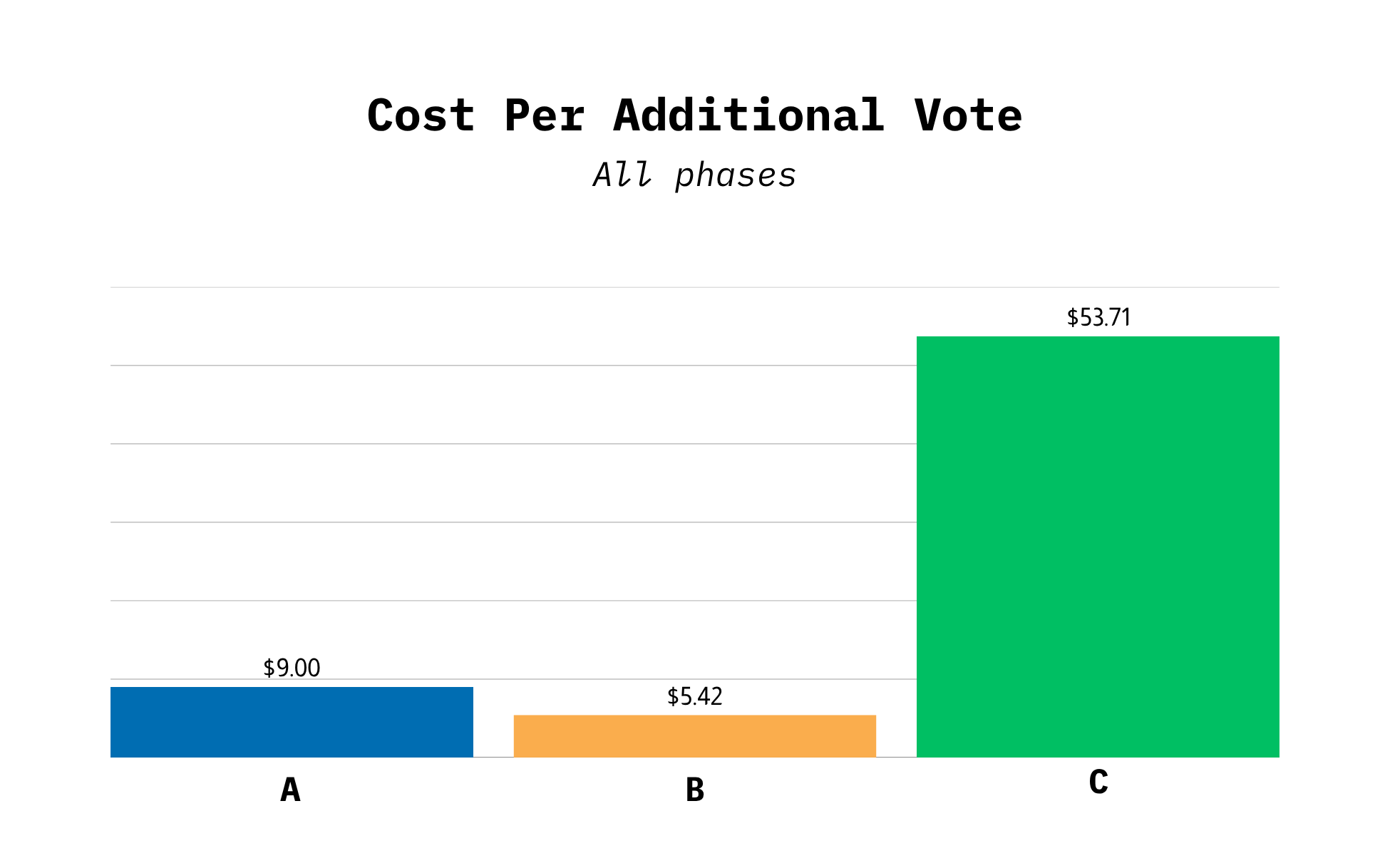
More texting doesn't mean more turnout. The group that received two texts — one before and one after the knock — actually performed worse than the single-text groups. It cost nearly ten times more per additional vote and didn't produce better results. Campaigns looking for efficiency should resist the urge to layer on extra touches without testing whether they add value.
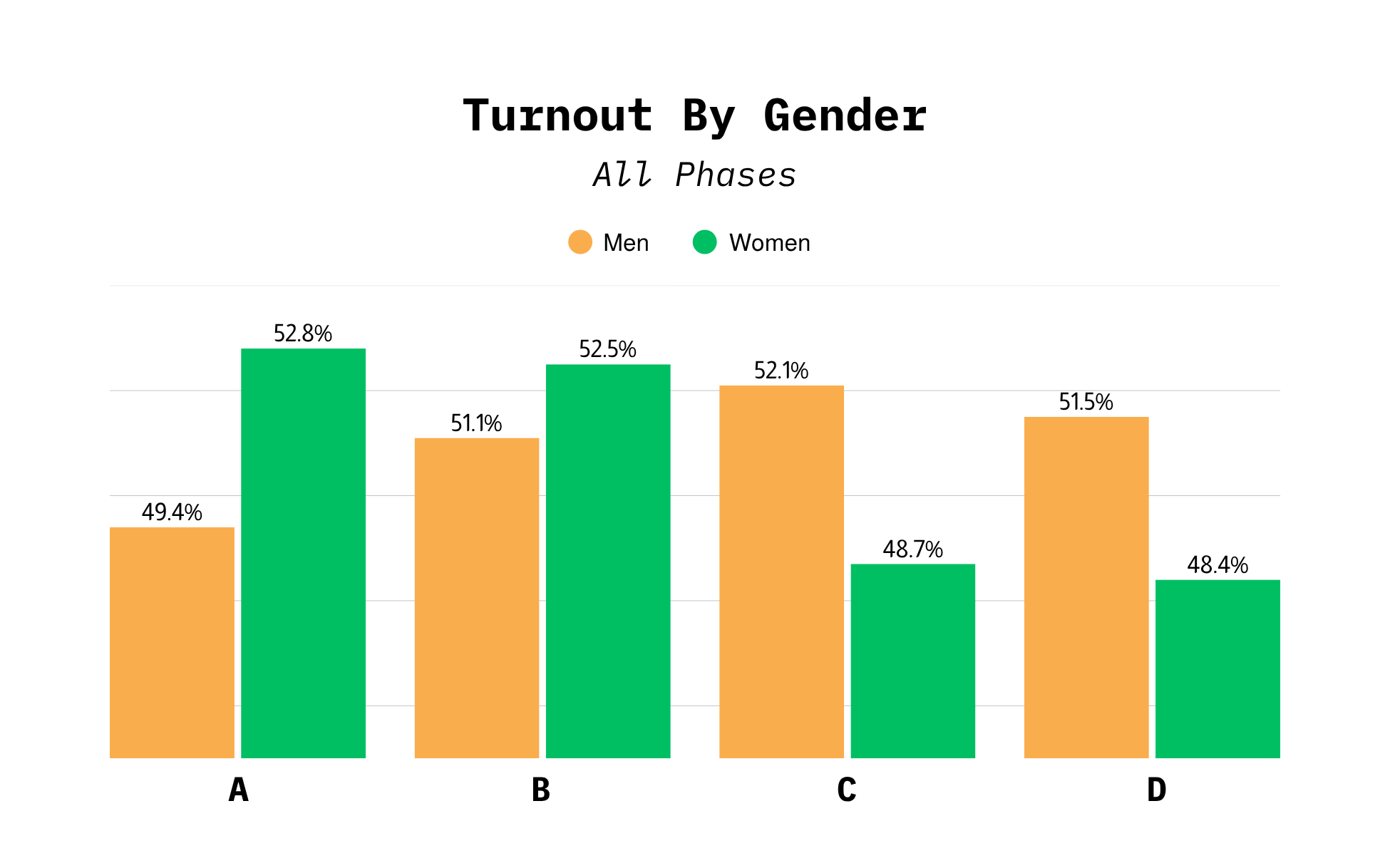
The biggest gains came from women. Among female voters, both the pre-text and post-text groups saw turnout increase by about four points over the control. Among men, the effect was essentially zero. This has major implications for targeting. If you're texting every voter on your canvassing list, you're diluting the impact. If you're focusing on women, you're capturing most of the benefit.
Texting doesn't make the door knock itself go better. One theory going in was that a pre-canvass text might "prime" voters to answer the door or engage with the canvasser. The data showed no meaningful differences in completion rates, refusal rates, or not-home rates across any group. The text's impact appears to happen after the interaction — reinforcing the message and keeping the campaign top of mind.
The takeaway is clear: treat texting as a low-cost follow-up tool for your canvassing program, not a replacement for it. Send a single text after the knock, target women where the data shows the strongest response, and don't assume more outreach automatically produces better results.